
Together, we're building safer healthcare: inside the Cgov Conference 2026
Thursday, 11 June 2026
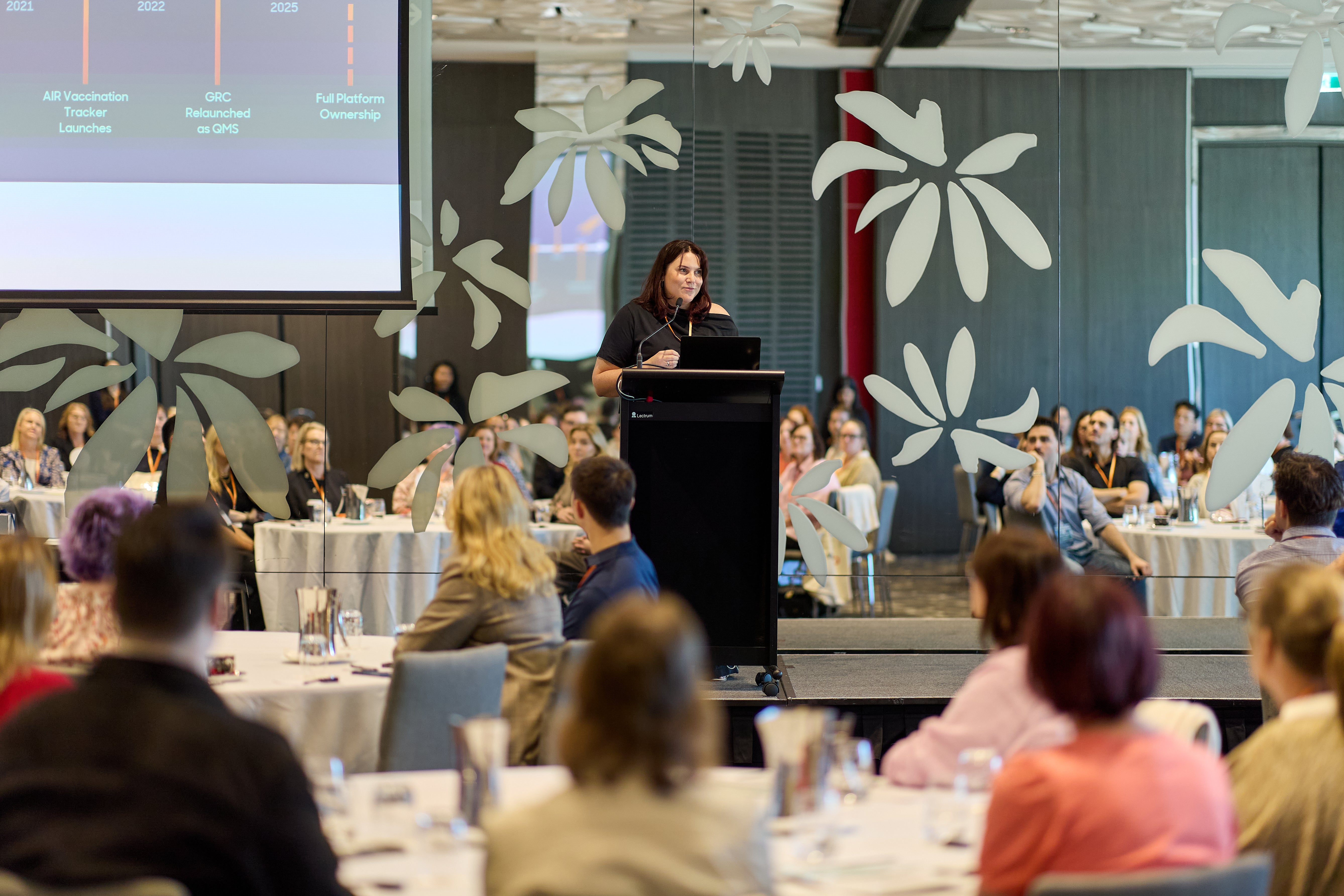
Healthcare leaders and credentialing professionals from across Australia and New Zealand came together for two days of shared learning and honest conversation about building safer, smarter healthcare systems.
A community with a common mission
The Cgov Conference brought together medical workforce managers, credentialing coordinators, quality and safety leaders, allied health professionals, legal advisors, hospital assessors and clinical governance specialists; all united by one goal: keeping patients safe through rigorous, well-governed workforce management.
The organisations presenting were not just digitising paper-based processes; they were redesigning governance by building it into everyday workflows, giving teams real-time visibility of compliance, and freeing them to focus on higher-value work.
Smarter workflows in practice
Several health services shared how they've transformed previously manual, paper-heavy processes through using the Cgov solutions. Sabbatical leave applications, 360-degree performance reviews, appointments and Credentialing, and Medical Appointments Committee (MAC) processes have all moved from fragmented email chains and spreadsheets into structured, automated workflows.
What once took up to two weeks to prepare, a monthly MAC agenda and minutes, can now be completed in a single day. Casual workforce governance, operating rights approvals, and Ahpra registration collection have similarly been redesigned from the ground up, with governance embedded into the workflow itself rather than applied as an afterthought.
The common thread across all these implementations: real-time visibility, automated reminders, full audit trails, and a complete move away from paper.
What accreditation assessors actually look for
One of the most valuable sessions of the conference came from an accreditation assessor's perspective. The message was clear: accreditation is not an inspection of documents; it is an assessment of how reliably safe care is delivered.
Organisations that perform best are not necessarily the largest. They are the ones where systems make safe practice easy and visible, where staff can explain why something matters (not just what the policy says), and where governance is part of everyday practice; not a rush job triggered by an upcoming assessment.
With short-notice assessments now the standard, the organisations best placed to succeed are those that show assessors what they do every day. Electronic clinical governance systems that surface dashboards, expiry reports, and scope of practice registers make that demonstration fast and convincing.
Privacy, AI, and the risks already in the room
A legal perspective on privacy and AI use prompted one of the liveliest discussions of the conference. The reality is that AI tools are already in use across healthcare organisations, often informally, and often in ways that carry real privacy and compliance risk.
Recent amendments to the Privacy Act have raised the stakes, with new obligations around automated decision-making disclosure, strengthened data security requirements, a new tort of serious invasion of privacy, and significantly increased penalties for breaches.
The practical takeaway for healthcare organisations: review and update privacy policies to reference AI use, obtain documented consent before using AI in clinical contexts, ensure any AI tool in use stores data securely within Australia, and provide regular staff training. Free consumer AI tools are not appropriate for use with patient information.
Quality and safety: A statewide transformation
A standout presentation showed what is possible when a large, multi-site health organisation commits to a single, standardised quality and safety incident management system. Moving from three different systems across eleven hospitals, with different data definitions and inconsistent reporting, to one statewide Cgov Quality Management Solution has delivered better data governance, more consistent reporting, and a genuine shift toward a Safety II approach: understanding what goes right, not just what goes wrong.
The staged implementation approach, rolling out to quality teams first, then expanding, was key to success. So was the co-design process that involved frontline staff and managers in shaping how the system would work in practice.
Allied health: Credentialing beyond the medical workforce
A dedicated session on allied health Credentialing highlighted the particular complexity of managing scope of practice across 25 different registered and self-regulating professions at a single health network.
The Cgov system has enabled automated new employee verification, electronic endorsement of scope of practice variations, real-time Ahpra registration monitoring, and organisation-wide visibility of every clinician's endorsed scope, including any conditions or supervision requirements. For self-regulating professions, an annual standards declaration process mirrors the rigour applied to registered practitioners.
Over three years, more than 1,000 new employees have been credentialled, nearly 850 clinicians have expanded their individual scope of practice, and 42 profession-wide scope changes have been endorsed, changes that have directly improved patient access and service delivery.
The platform road ahead
Cgov is entering an exciting new chapter. The acquisition of the underlying platform source code will give the organisation direct control over development for the first time, meaning platform enhancements can be driven by what clients need, not by the limitations of a third-party vendor.
Version 9 is in advanced testing, bringing a modernised interface, improved infrastructure, and Cgov's own hosting services. SMS reminders and bulk attachment migration are now available, while Working with Children Check integration and enhanced Ahpra refresh tools are still in development. Lighter-weight products for day hospitals and new solutions for ambulance services are expanding access to clinical governance tools across the sector.
The AI opportunity
A facilitated brainstorming session gave attendees the chance to share where they see AI fitting into Credentialing and workforce management. Ideas included AI-assisted document verification, automated report generation, intelligent follow-up for missing information, and chatbot support for system queries.
The consensus: AI has real potential to reduce administrative burden, but it needs to be governed, gated, and grounded in organisational data. The conversation is just beginning, and Cgov is listening.
The journey continues
The Cgov Conference is more than a gathering; it is a reminder that the work of Credentialing and clinical governance, often quiet and behind the scenes, sits at the very heart of patient safety. The energy, ideas, and shared experiences from these two days will continue to shape the way we build better, safer healthcare systems across Australia. We look forward to continuing that journey together.



The information in thispublication does not constitute legal, financial or other professional advice and should not be relied upon as such. It is intended only to provide a summary and general overview on matters of interest and it is not intended to be comprehensive. Persons implementing any recommendations contained in this publication must exercise their own independent skill or judgment and seek appropriate professional advice relevant to their own particular circumstances. Compliance with any recommendations will not in any way guarantee discharge of the duty of care owed to patients and others coming into contact with the health professional or practice. Cgov and its related entities are not responsible to any person for any loss suffered in connection with the use of this information. Information is only current at the date initially published. © Avant Mutual Group Limited 2026.